Introduction
Ramadan is a time of spiritual reflection, discipline, and community. However, fasting from sunrise to sunset also means going many hours without water. While most people focus on food choices during Ramadan, hydration is just as important for maintaining energy, supporting metabolism, and preventing weight gain.
In fact, poor hydration can slow metabolism, increase cravings, and make weight management during Ramadan much more difficult.
Understanding the right Ramadan hydration tips can help you stay energised, reduce fatigue, and maintain healthy habits throughout the month.
Why Hydration Matters During Ramadan
When the body goes long periods without fluids, several physiological changes occur.
First, dehydration can slow metabolic processes. Your body becomes more conservative with energy use, which may reduce calorie burning efficiency.
Second, thirst signals can often be mistaken for hunger. This means that when you break your fast, you may eat more than necessary simply because your body is actually asking for water.
Third, dehydration can increase fatigue and headaches, which makes it harder to maintain physical activity or healthy routines.
Proper hydration during Ramadan supports:
Stable energy levels
Healthy digestion
Appetite regulation
Improved metabolism
Better focus and mood
These benefits make hydration a key pillar of weight management during fasting.
How Dehydration Affects Weight Management
Many people assume fasting automatically leads to weight loss. In reality, dehydration can sometimes have the opposite effect.
When your body lacks fluids, it may retain water to protect itself. This can create temporary bloating or weight fluctuations.
Dehydration also affects hunger hormones. When the body is under stress from lack of water, cravings for high-sugar foods can increase. That is why many people notice stronger dessert cravings after iftar.
Staying properly hydrated helps regulate these signals, making portion control and balanced eating much easier.
How Much Water Do You Actually Need?
A simple way to estimate daily water needs is based on body weight.
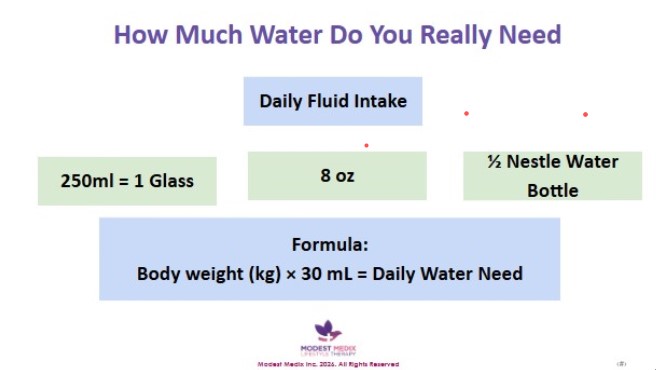
Dr. Saima recommends the following formula for hydration:
Body weight (kg) × 30 mL = Daily Water Requirement
For example, if someone weighs 70 kg, they would need approximately 2.1 litres of water per day.
This formula provides a personalised hydration target that supports metabolism and overall health.
Because fasting limits when you can drink, spreading water intake strategically between iftar and suhoor becomes essential.
Dr. Saima’s Hydration Rule: The Rule of 3 + 3
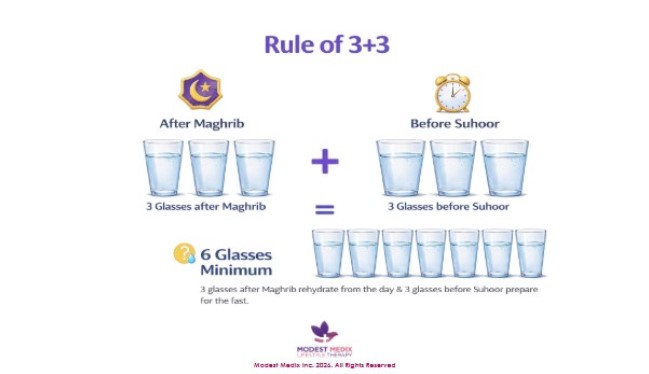
One of Dr. Saima’s favourite practical Ramadan hydration tips is called the Rule of 3+3.
The rule is simple:
3 glasses of water after Maghrib (iftar)
3 glasses of water before Suhoor
This ensures a minimum of six glasses of water during the evening and early morning.
The first three glasses help rehydrate the body after a long day of fasting. The final three glasses prepare your body for the next day’s fast.
Spacing your hydration this way is much easier than trying to drink large amounts at once.
Smart Ramadan Hydration Tips for Better Metabolism
Following practical hydration strategies can improve both energy levels and metabolic health during Ramadan.
1. Start Iftar With Water First
Before eating, drink one or two glasses of water. This immediately begins rehydration and helps control portion sizes during the meal.
2. Hydrate Consistently Through the Evening
Rather than drinking large amounts at once, take small sips throughout the evening.
Consistent hydration improves absorption and prevents bloating.
3. Eat Water-Rich Foods
Certain foods help contribute to hydration levels, including:
cucumbers
watermelon
oranges
tomatoes
yogurt
Including these foods at iftar or suhoor supports hydration naturally.
4. Reduce Salty and Fried Foods
High-sodium meals increase thirst and dehydration the following day.
Balancing meals with vegetables, protein, and complex carbohydrates helps maintain fluid balance.
5. Limit Sugary Drinks
Juices, sodas, and sweet beverages can cause blood sugar spikes and crashes.
Water remains the best hydration choice for metabolic stability.
Hydration and Energy Levels During Ramadan
Fatigue during Ramadan is often linked to dehydration rather than lack of calories.
Even mild dehydration can cause:
headaches
low concentration
dizziness
reduced physical performance
When hydration improves, many people notice immediate improvements in energy and focus.
This is why hydration strategies should be prioritised alongside nutrition planning.
The Connection Between Hydration and Appetite
Hydration plays an important role in appetite control.
When the body is dehydrated, hunger signals may increase even if energy needs are already met.
Drinking water before and during meals helps activate fullness signals more quickly. As a result, people naturally eat less and feel satisfied sooner.
For individuals working on weight management during Ramadan, this simple strategy can make a meaningful difference.
How Modest Medix Can Help
Maintaining healthy habits during Ramadan can be challenging, especially when balancing fasting, work, family life, and health goals.
At Modest Medix, our physician-led weight management program provides personalised guidance to help patients maintain sustainable progress year-round.
Our comprehensive program includes:
Supervised use of Ozempic, Wegovy, or alternative medications when appropriate
Customised nutrition support tailored to lifestyle and cultural needs
ACT-based behavioural therapy to address emotional eating and long-term habit change
Metabolic and genetic testing to identify underlying health factors
Ongoing coaching and follow-up to support long-term success
We focus on helping patients understand their metabolism and develop strategies that work in real life, including during Ramadan and other lifestyle changes.
Conclusion – Ramadan Hydration Tips for Weight Management and Metabolism
Hydration is often overlooked during Ramadan, yet it plays a critical role in metabolism, energy levels, and appetite regulation.
Simple strategies like Dr. Saima’s hydration formula and the Rule of 3+3 can make staying hydrated much easier.
By prioritising water intake, balancing meals, and spreading fluids throughout the evening, you can support both your health and your weight management goals during the fasting month.
Small habits create lasting change.
And when you need expert guidance, the Modest Medix team is here to help.
Written by the Modest Medix Clinic Team | Reviewed by Dr. Saima Khan (Dr. Eskay)